
Pacita Abad and Her Impact on Modern Philippine Art
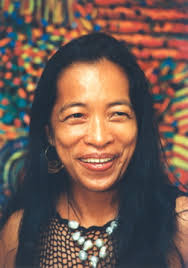
Pacita Abad, an artist, traveller and political activist, spent her years creating colourful and vibrant paintings that showcase her personality and life experiences.
The early life and education of Pacita Abad
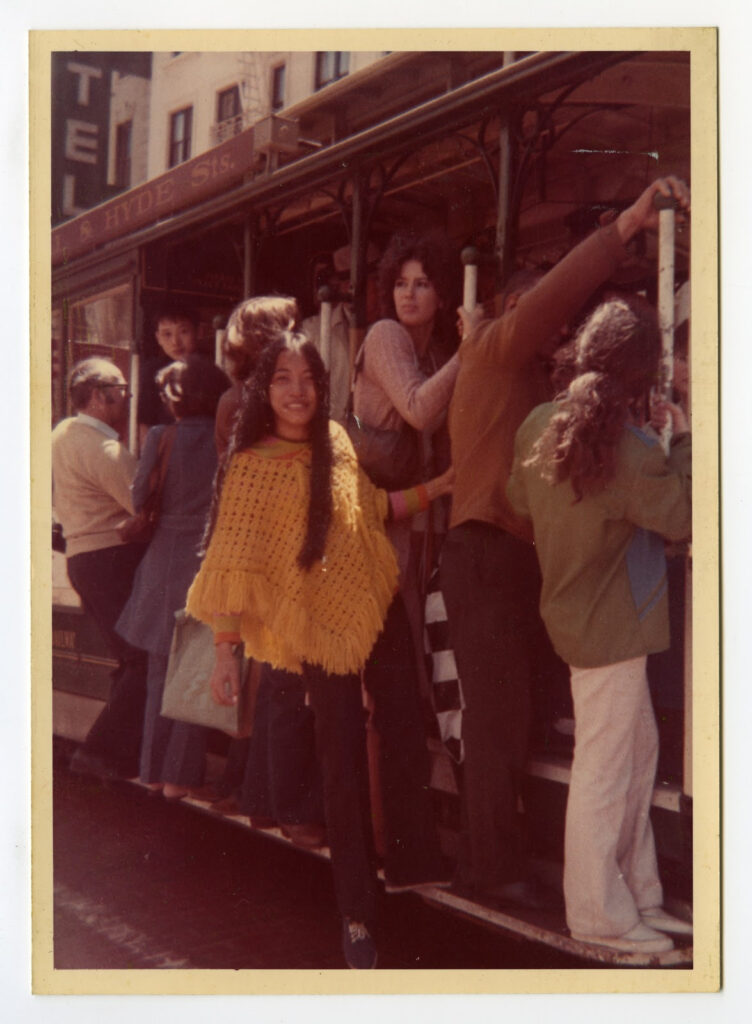
Pacita Abad was born on October 5, 1946, in the Philippines to Jorge Abad and Aurora Barsana Abad, both prominent politicians. Following her parents’ footsteps, Abad studied political science at the University of the Philippines, graduating in 1968. In the next year, she began her graduate study in Law. During this time, she and her classmates organised demonstrations to protest against the fraudulent election. Unfortunately, this led to Abad being a target of political violence, forcing her to leave the Philippines and incompleting her postgraduate law degree. Despite moving to San Francisco to continue her graduate studies, she still remained an avid speaker against the dictator, Ferdinand Marcos, who was oppressing the citizens of the Philippines. Abad experienced cultural shock in San Francisco as she was a sheltered catholic girl now being exposed to cultural and religious diversity, music and drugs.
The start of Abad’s passion for art
Pacita Abad’s passion for art started much later in life. Her husband at the time, George Kleiman, introduced her to the arts and the San Francisco art scene. After completing her Master’s degree, Abad decided to travel across Asia with her boyfriend, Jack Garrity. Abad’s trip to Asia inspired her to pursue art as she felt it was her true calling. Her trip across Asia led her to develop an artistic appreciation for each country’s culture and traditional textiles. Throughout her life, Abad travelled to 60 countries, including Sudan, Yemen, the Dominican Republic, and Indonesia. In the country she visited, she learnt about the art techniques and traditions, as well as learning about the community’s struggles and stories, which she later incorporated into her artwork.
Marcos and his cronies
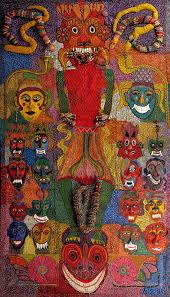
Pacita Abad’s most famous art piece is a 17-foot-high trapunto painting named Marcos and his cronies. Trapunto is a quilting technique where you add extra stuffing to create a 3D-like design. Abad used this technique in many of her paintings. In this painting, Abad uses florid colours and African tribal motifs. She depicts Marcos, the subject of the painting, as a large dragon demon with his mouth stuffed with puppets, symbolising the suffering he caused to Filipinos. Surrounding Marcos are 18 masks representing all the individuals who were involved in Marcos’ corruption. This painting was inspired by Abad’s time in Sri Lanka, when she first encountered Sinhalese exorcism masks. The reason she used the mask in the painting was that she believes the Philippines needs an exorcism from Marcos’ regime.
Pacita Abad died on December 7th, 2004, after battling lung cancer for 3 years. She was a role model to many, inspiring them to travel and immerse themselves in different cultures.