
5 Black British Women Artists Who Pioneered the Black British Art Scene
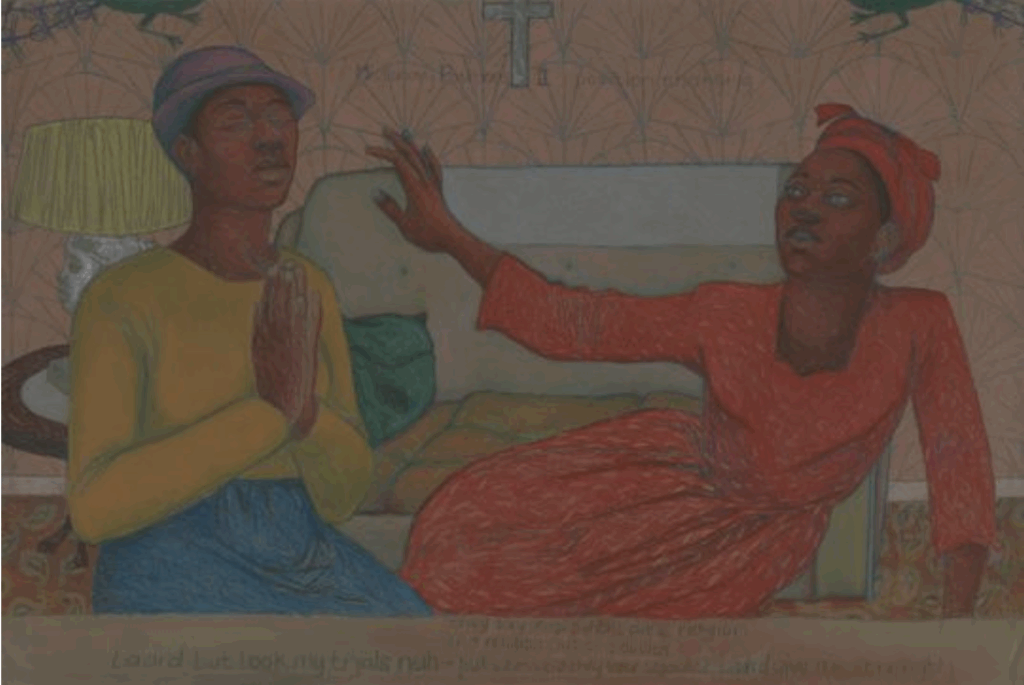
These five influential Black British women artists have had a profound impact on the art world through their art and activism.
Lubaina Himid
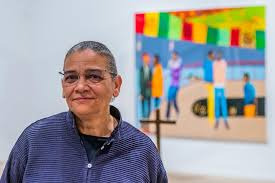
Born in Zanzibar in 1954 but raised in the UK, Lubaina Himid is a British artist and curator who has dedicated her life to creating spaces that are inclusive to marginalised groups, especially towards Black Women. Himid’s artwork revolves around her culture, mocking Western historical heroes and celebrating Black creativity. Himid’s uses bold and vibrant colours in her paintings, which creates a visually appealing image. She is a prominent artist, as she curated many important exhibitions, such as Five Black Women at the Africa Centre in 1985, Black Woman Time Now at Battersea Art Centre in 1983 and The Thin Black Line at the Institute of Contemporary Art in 1985, which exhibited many young Black and Asian women, giving them a space to present their artwork as they were excluded from art exhibitions. She also made history by becoming the first Black woman to win the Turner Prize in 2017.
Sonia Boyce
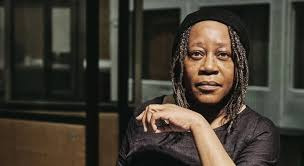
Sonia Boyce was born in 1962 in the East End of London to Caribbean immigrant parents who instilled cultural pride in her at a young age, which she carries throughout the years and conveys in her art. Boyce pioneered the Black British art scene by exploring her identity as a Black British woman through her art, which was considered groundbreaking at the time, as it wasn’t the traditional artistic narrative during the 1980s. In many of her artworks, she addresses issues of race, gender and equality. One of her most famous artworks is She Ain’t Holdin’ Them Up, She’s Holdin’ On, where Boyce draws herself holding up her family. This artwork implies the struggle that many Black British woman face in holding on to their cultural identity.
Maud Sulter
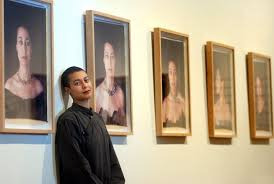
Maud Sulter was a photographer, writer, Fine artist and curator born in 1960. She started her career as a writer by publishing her first book, As a Black Woman, in 1985. In the same year, she participated in The Thin Black Line, curated by Lubaina Himid. Sulter was mostly known for her photography. Her series Zabat is her best-known work, which features nine portraits of Black British creative women, each portrayed as a muse from ancient Greek tradition. Many traditional Western art centres around white women; Sulter challenges this by making Black women the focal point. She made a significant impact by questioning the underrepresentation of Black Women in art culture, leading her to become one of the pioneers in the Black British art scene.
Ingrid pollard
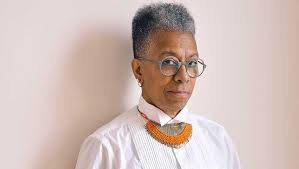
Ingrid Pollard was born in 1953 in Georgetown, Guyana and was raised in the UK. She is a British artist and photographer. In the 1980s, Pollard produced her most famous series, Pastoral Interludes, in which she photographed Black people in rural landscapes. Her work placed Black bodies in rural areas, places that are typically inhabited and visited by white people. She challenges the notion that Black people only exist in urban cities. Her work looks at themes of race, the environment and history. She is an influential figure in the Black British art scene, as she captures Black British people in the countryside and questions who is seen as belonging in the UK.
Claudette Johnson
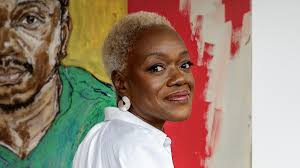
Claudette Johnson is a British visual artist, born in 1959 in Manchester. Johnson started off her art career in 1981 when she joined the BLK art group, a group of young black artists that aimed to empower black artists. She is mostly known for her large-scale drawings of black women. Johnson works with a variety of media, such as pastel, watercolour and gouache. Figure in Blue is Johnson’s most notable work; she draws a sitter whose body is turnt away. In many of her paintings, Johnson explores the emotions and vulnerability of black women. Claudette Johnson is a key figure in Black British art, as she was one of the first artists to centre black women at a time when they were absent in mainstream art.